 Roof
Two roof areas
Main roof: Custom Orb at 30°, which passes pitch screening. Shed: Trimdek at 1°, below the 2° minimum for that profile.
Sample report · Fictional inspection
A complete 13-page sample made in the RoofFindings iPhone app: cover and summary, two roof areas with overview photos, pitch checks, a leak with make-safe and rectification photos, recommendations and separate insurable and non-insurable items.
14 days or 2 issued reports, whichever comes first. Includes 1 assessor. Available on iPhone and Android. No card required. Your trial does not automatically become a paid subscription.
Fictional inspection. The company, people, address, claim number, findings and outcomes are invented. The photographs are of a real property, used with permission, for illustration only. Photo annotations are illustrative, not verified evidence of hail or any real claim, and the sample is not an insurer decision. The PDF was generated in the RoofFindings iPhone app; sample labels, a trial panel, one photo crop and covered product brand names were added afterwards.
The approved PDF is preserved exactly as reviewed on 10 November 2026. Its closing trial panel refers to iPhone and pre-release availability at that date. RoofFindings is now available on iPhone and Android; use the current download buttons on this page. The added sample labels and trial panel are marketing presentation, not automatic app output.
Main roof: Custom Orb at 30°, which passes pitch screening. Shed: Trimdek at 1°, below the 2° minimum for that profile.
The main roof is recorded as insurable, with a re-roof recommendation. The shed is recorded as not insurable, with a separate pitch-rectification requirement.
Lounge-room staining is traced to a gap at a ridge junction, recorded as maintenance and sealed on site, with before and after photos.
Rusting shed sheets and gutter debris are recorded as non-insurable items, not as storm damage.
Outcome labels and photo annotations record the assessor’s opinion. In this fictional sample they are illustrative, and none of them is a coverage decision.
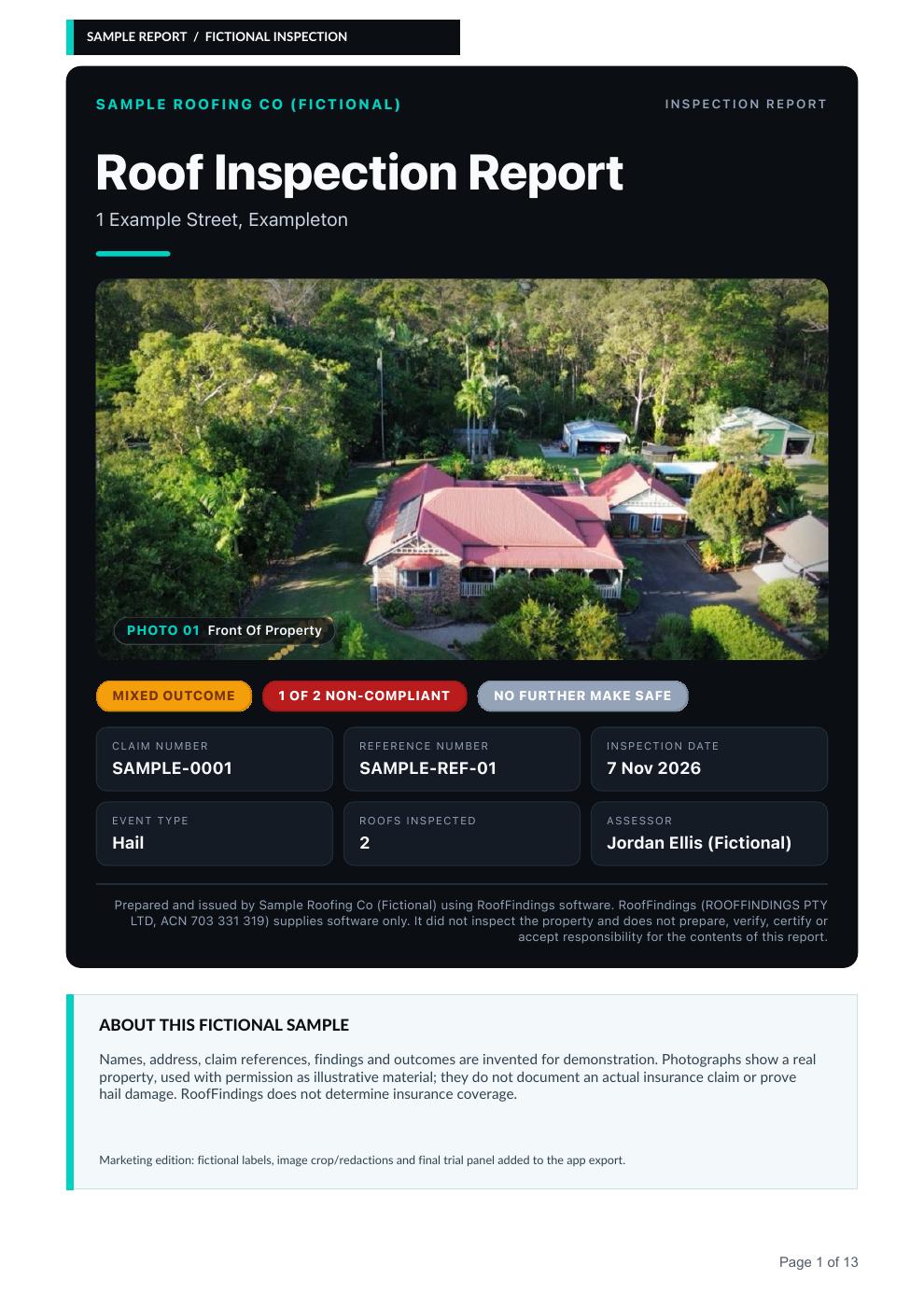
The cover leads with the front-of-property photo, the outcome badges and the claim, reference, date, event and assessor.
Why it matters: The reader knows what the report covers before turning a page.
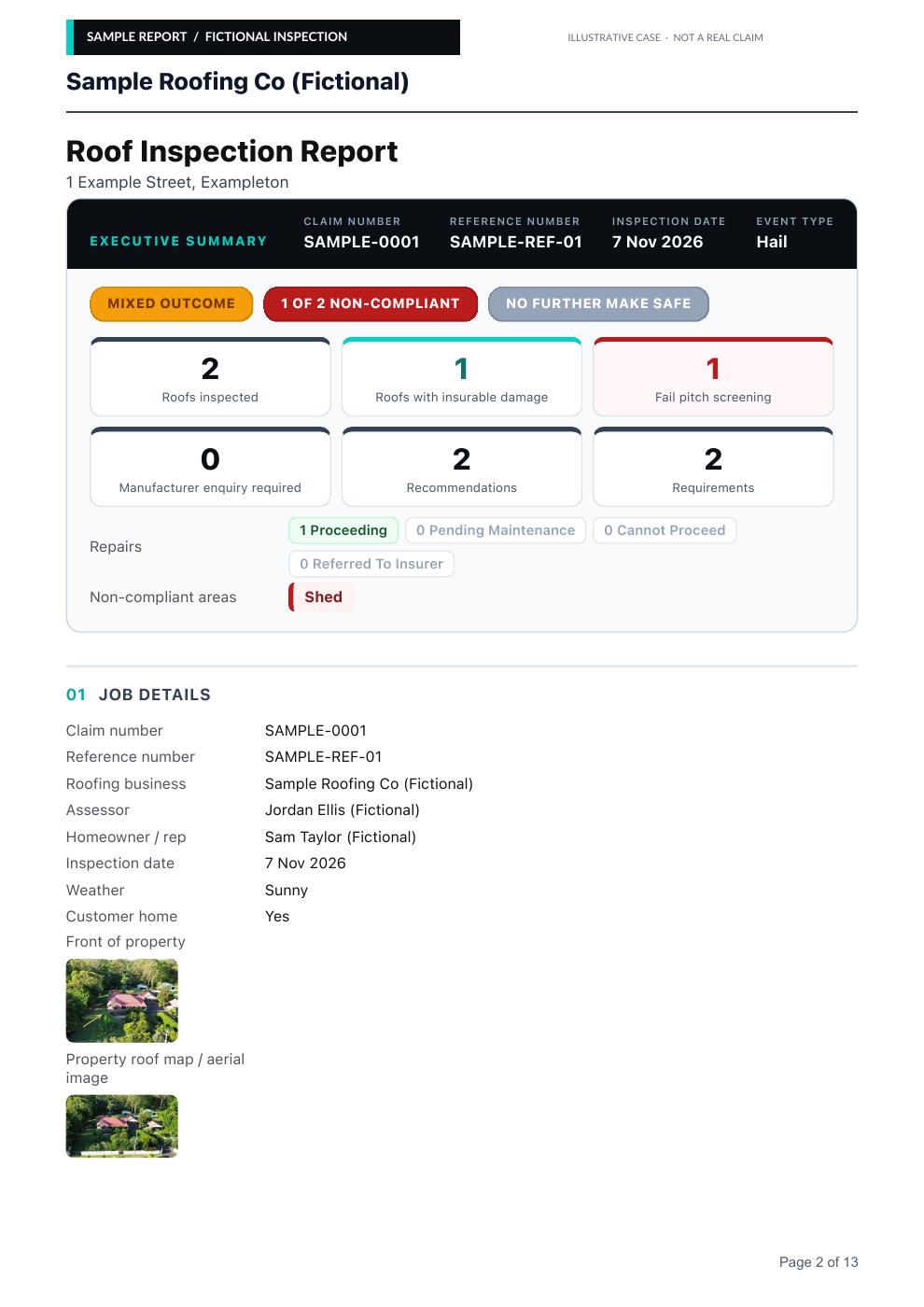
Roofs inspected, roofs with insurable damage, pitch screening, recommendations, requirements and non-compliant areas are counted up front, followed by the job details.
Why it matters: A reviewer sees what was found and what needs action at a glance.
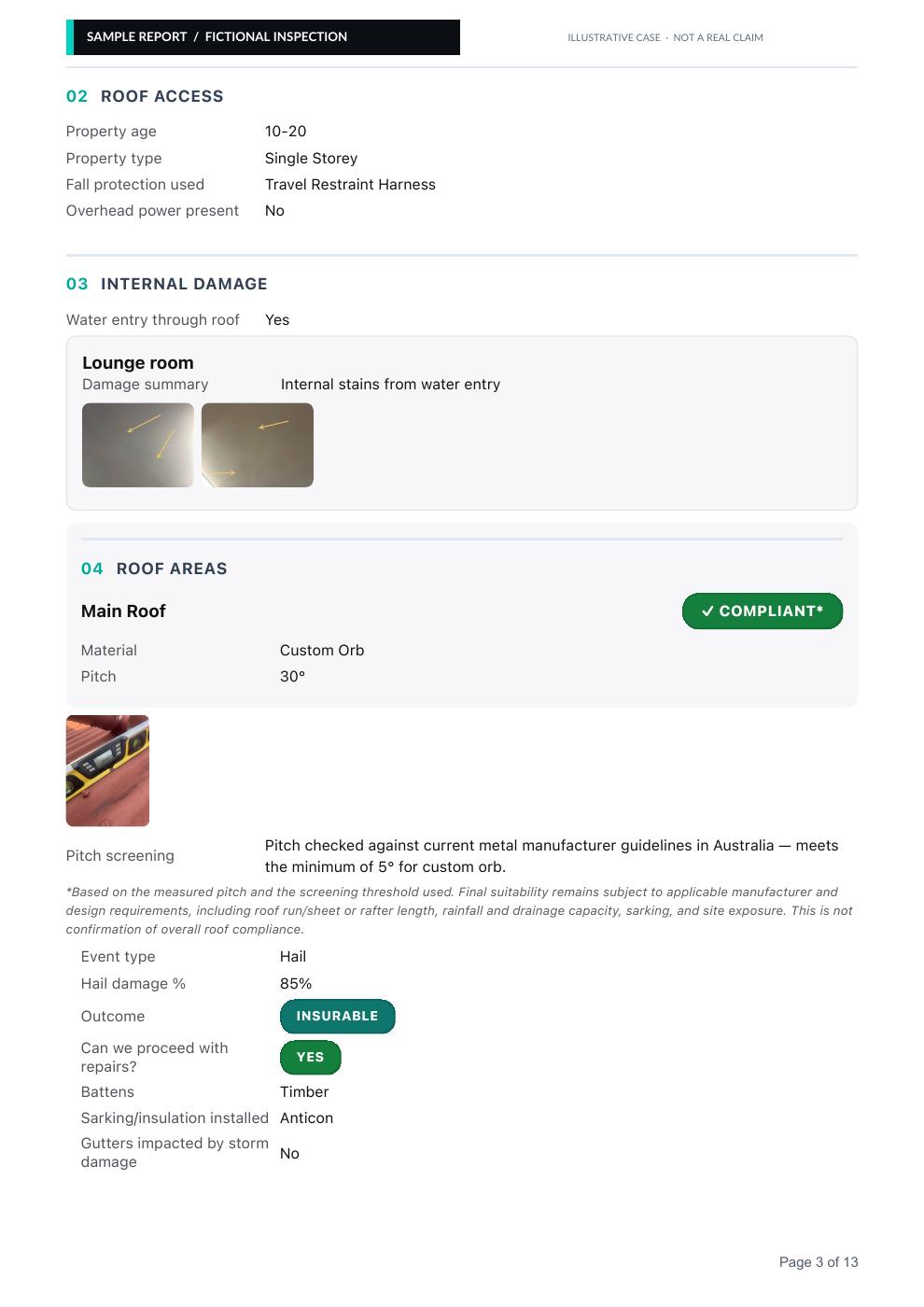
Material, the measured pitch with its photo, the pitch check, hail extent, outcome and whether repairs can proceed sit together for the roof area.
Why it matters: The pitch check is a lookup against published manufacturer minimums, not an AI estimate, and states its own limits.
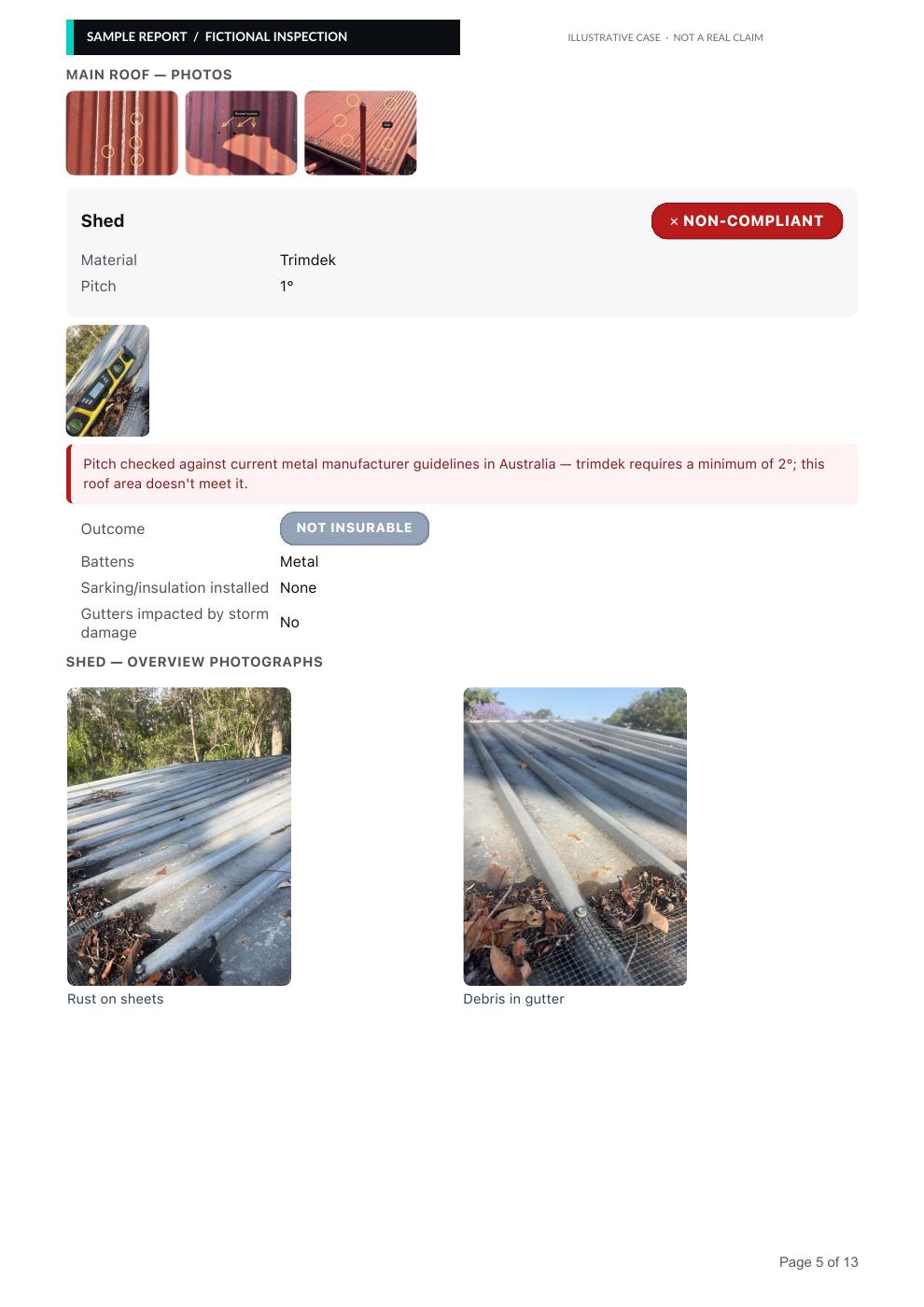
The shed’s Trimdek roof was measured at 1°, below the 2° minimum for that profile, so the area is flagged non-compliant and shown with its own overview photos.
Why it matters: A compliance problem is flagged on the roof area it belongs to, not lost in the overall result.
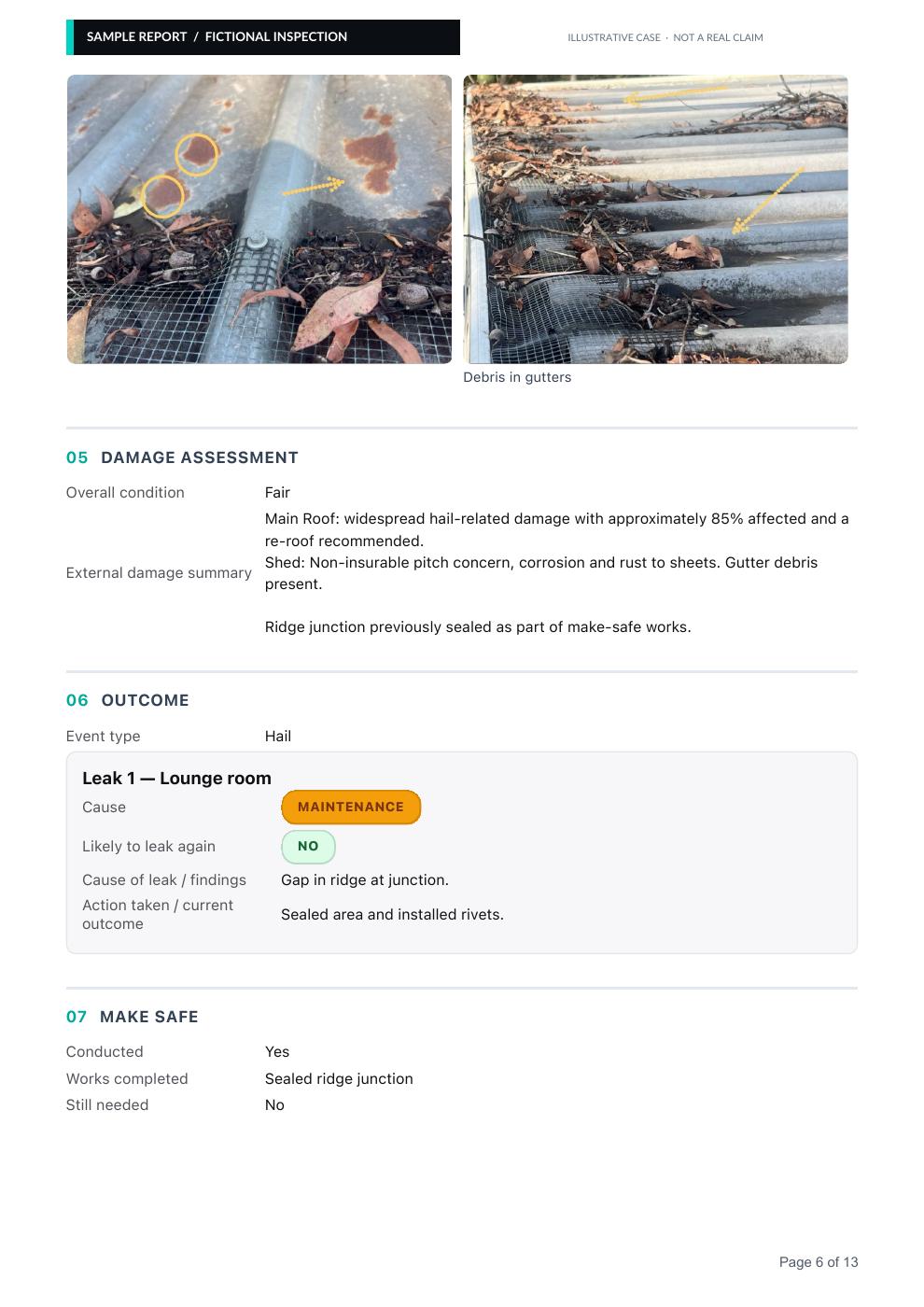
The damage assessment, a lounge-room leak traced to a ridge junction and recorded as maintenance, and the make-safe completed on site.
Why it matters: Cause, likelihood of recurrence and the action taken are recorded for each leak.
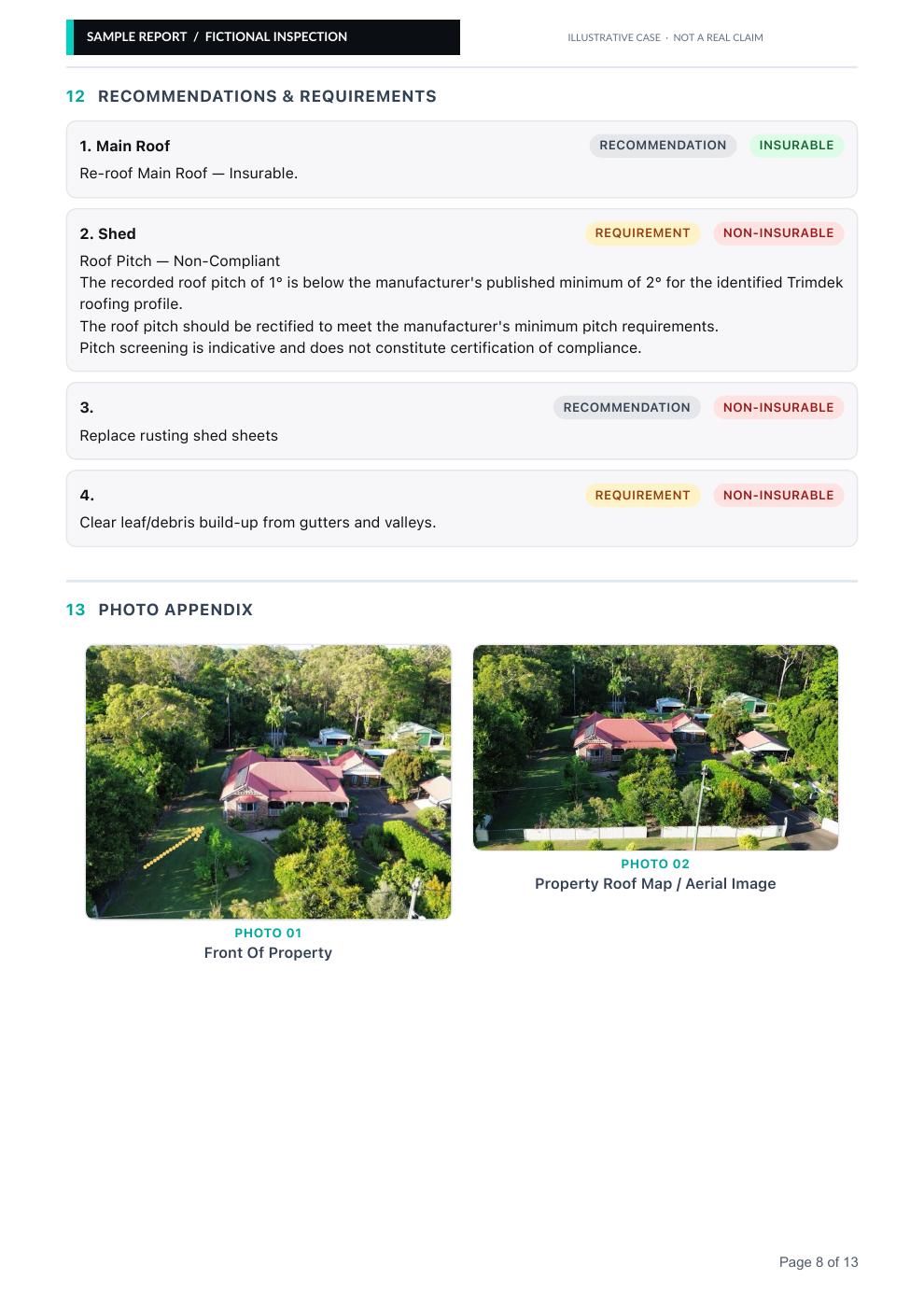
Each recommendation and requirement is classified. The non-insurable shed pitch finding calls for rectification to the manufacturer minimum, separately from the insurable main-roof re-roof recommendation.
Why it matters: Storm work, maintenance and insurer decisions stay separate.
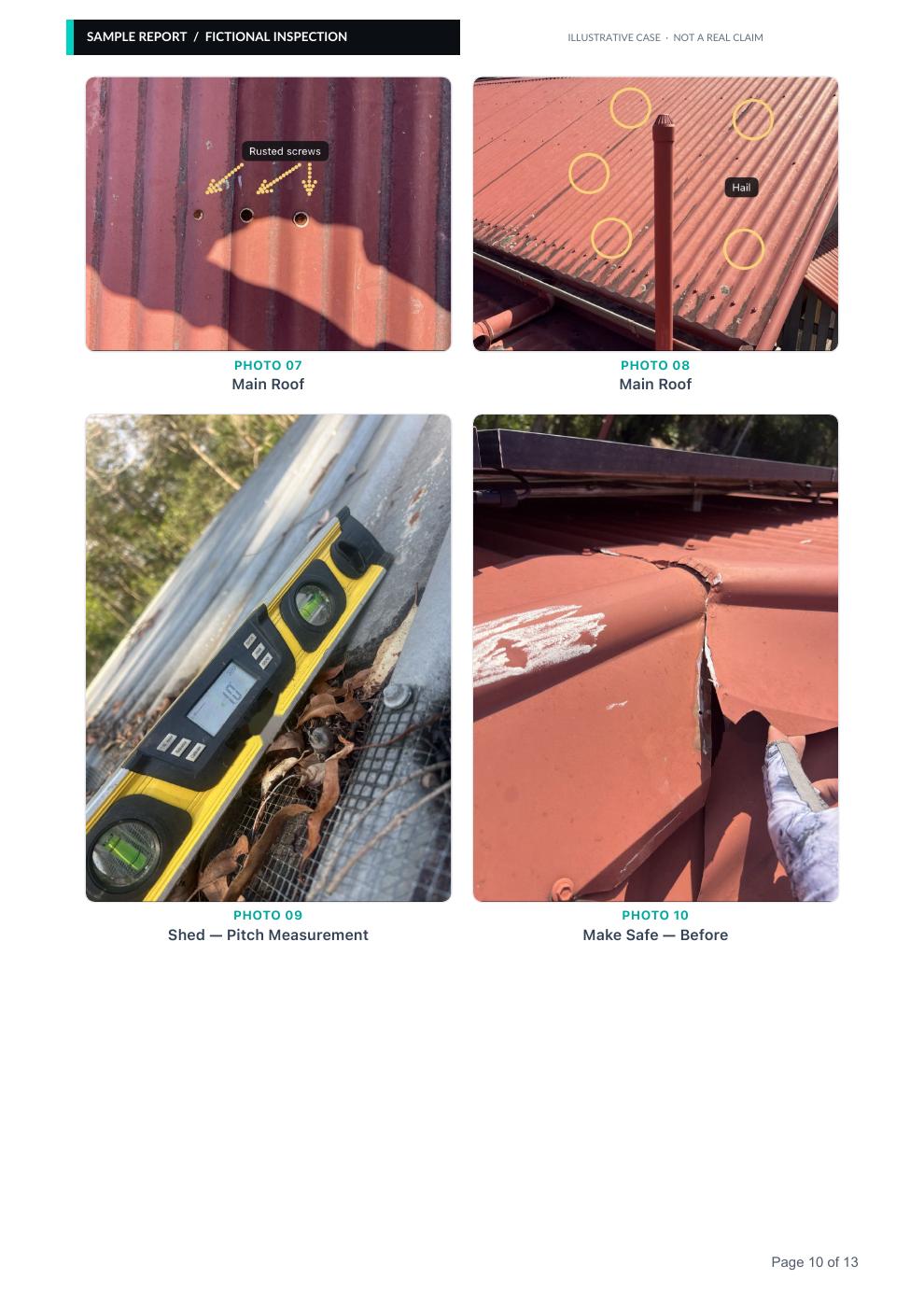
Annotated photos appear numbered and captioned, including the shed pitch reading and the make-safe before and after.
Why it matters: The reader can check each finding against the photo it relies on.
Site facts and roof construction give each roof area context. Observations and labelled evidence support the findings. The assessor explains the reasoning, checks the actions and reviews the report.
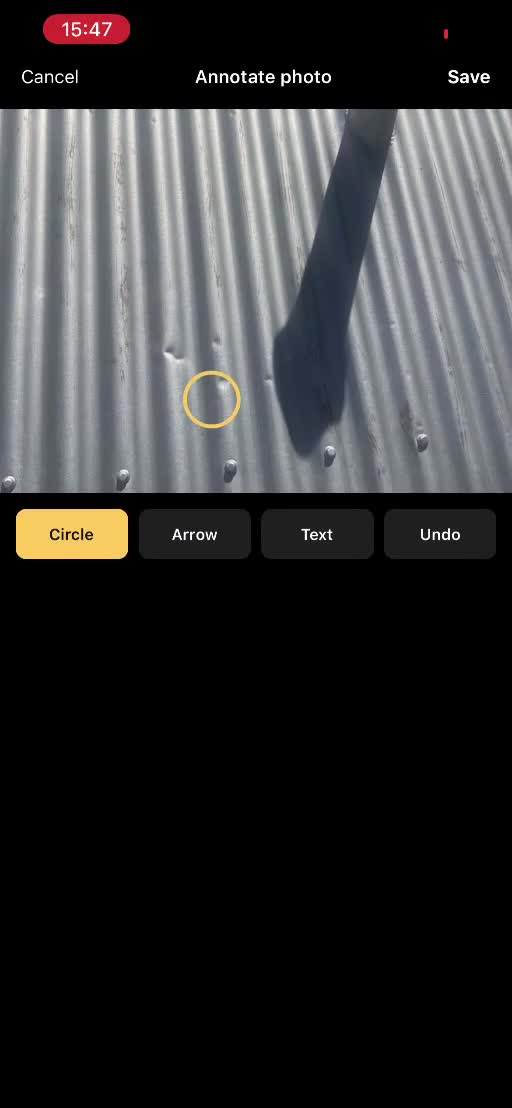
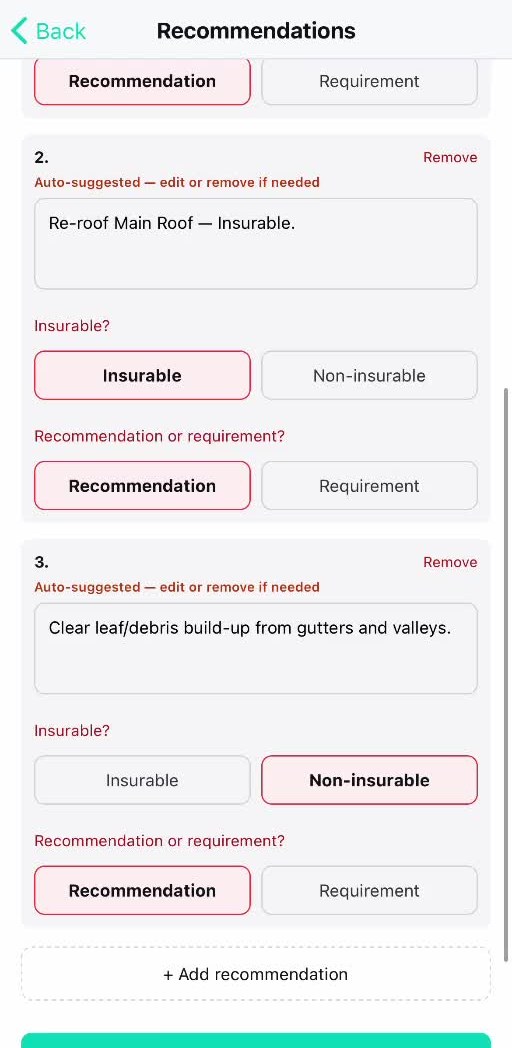
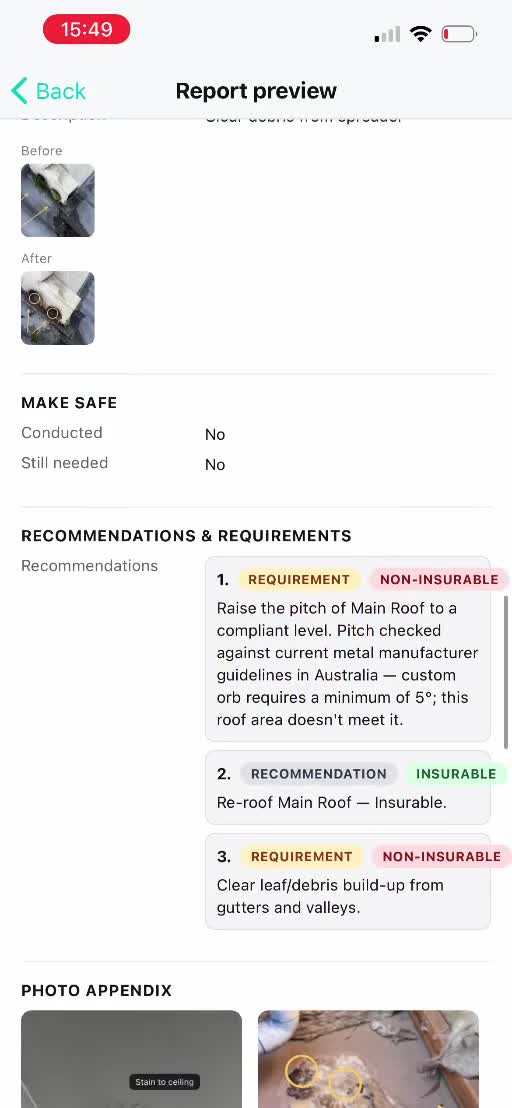
These separate, existing product captures show the workflow without identifiers; they are not captures of this sample job. Explore the product tour or start with the Free roof report template.
No. The company, people, address, claim number, findings and outcomes are fictional. The photographs are of one real property, used with permission, for illustration only. They are not evidence of any real claim.
The report was generated in the RoofFindings iPhone app. We then added the sample labels, a notice on the cover and a trial panel on the last page, cropped one photo, and covered product brand names in three photos. This approved marketing edition also includes fictional presentation labels; the trial panel is separate from the inspection report.
No. RoofFindings records the assessor’s technical opinion on the cause of damage. Policy coverage, claim acceptance and entitlement remain decisions for the insurer.
The shed’s Trimdek roof was measured at 1°, below the 2° manufacturer minimum the report screens against for that profile. The report records a non-insurable pitch finding and a rectification requirement, separately from the main-roof storm repair recommendation. Pitch screening is a reference check, not certification.
Use the free roof inspection report template for structure. Every real report needs evidence from your own inspection and must follow your client’s requirements.
Trial RoofFindings on iPhone or Android for 14 days or 2 issued reports, whichever comes first. Includes 1 author/assessor seat; no card required. Pro is A$99/month with 20 issued reports and 1 assessor. Your free trial does not automatically become a paid subscription; subscribe only when you choose.